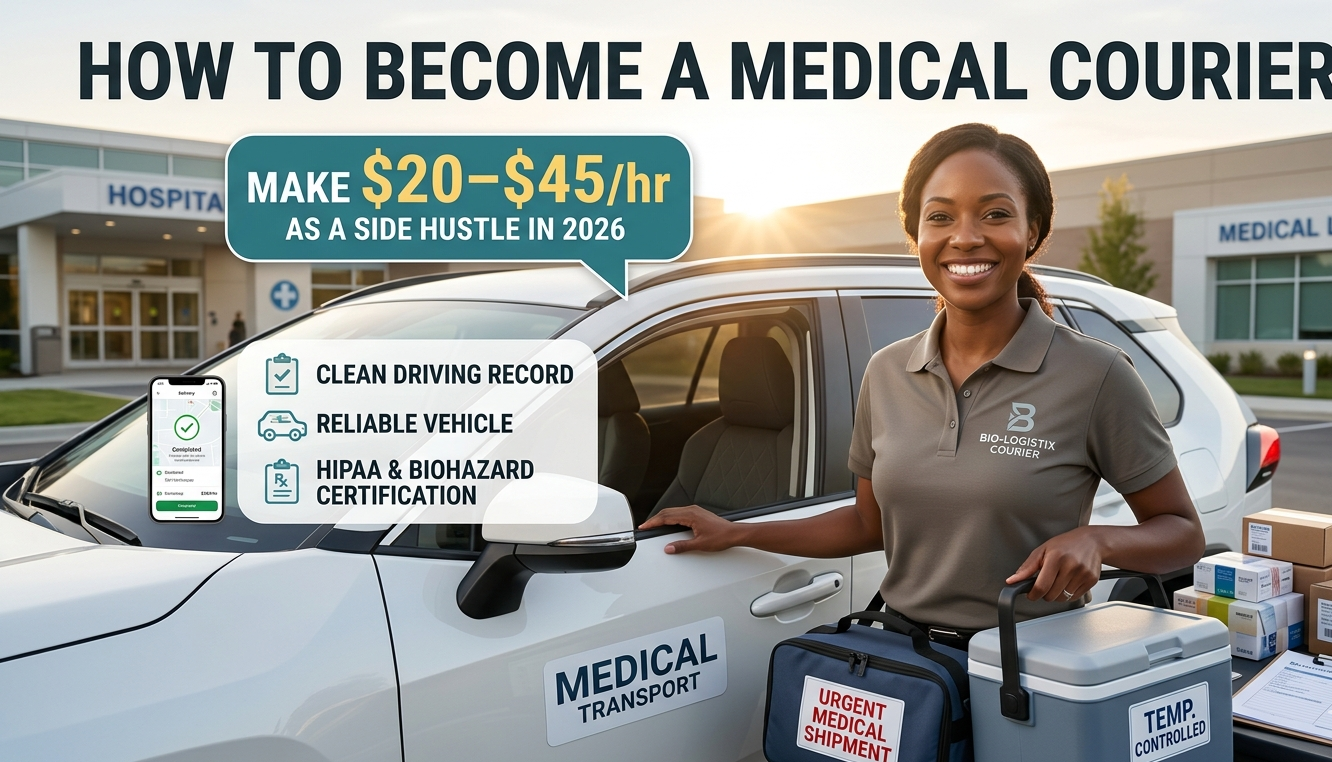
How to Become a Medical Courier: Make $20–$45/hr as a Side Hustle in 2026
No degree, no prior experience, and no special training required — just a reliable vehicle and a clean driving record. Here’s everything you need to get started.
What Is a Medical Courier?
A medical courier is an independent contractor or employee who transports medical items between hospitals, labs, clinics, pharmacies, blood banks, and patients’ homes. Unlike regular delivery drivers, medical couriers handle time-sensitive and sometimes regulated cargo — but that’s also exactly why the pay is better.
The types of items you might deliver include:
- Lab specimens (blood, urine, tissue samples)
- Prescription medications and pharmaceuticals
- Medical equipment and supplies
- X-rays, MRI films, and medical records
- Organ transplant materials (specialized, higher pay)
- COVID/diagnostic test kits
You are not a nurse or EMT. You’re the reliable link between one medical facility and another — and that link matters enormously in healthcare.
The U.S. medical courier industry is projected to exceed $5.4 billion in 2026, driven by an aging population and the explosive growth of at-home diagnostics and telehealth.
How Much Do Medical Couriers Make?
Pay varies significantly based on cargo type, employer, location, and whether you’re an employee or independent contractor. Here’s a realistic breakdown:
| Delivery Type | Typical Pay | Schedule | Difficulty |
|---|---|---|---|
| Lab specimens | $18–$26/hr | Early morning, weekends | Easy |
| Pharmacy / prescriptions | $16–$24/hr | Flexible, daytime | Easy |
| Medical equipment | $20–$32/hr | Business hours | Moderate |
| STAT / urgent runs | $28–$45/hr | On-call, nights | Moderate |
| Organ / tissue transport | $40–$75/hr | Emergency, irregular | Specialist |
Income as a Side Hustle vs. Full-Time
As a part-time side hustle working 15–20 hours per week, you can realistically earn $1,200–$2,400 per month. Full-time medical couriers (40+ hours) earn between $45,000 and $70,000 annually, with experienced couriers in high-demand metro areas pushing past $80,000.
Early morning “route” runs — typically 5am–9am for lab specimen pickups — pay a premium and rarely conflict with a day job. This is the sweet spot for side hustlers.
Requirements to Get Started
The barrier to entry is genuinely low. Most medical courier companies require the following:
Reliable Vehicle
A car, SUV, or van in good condition. Some organ/equipment runs require a larger vehicle.
Valid Driver’s License
A standard driver’s license is sufficient for most routes. CDL not required.
Clean Driving Record
No major violations in the past 3–5 years. Minor infractions may still be accepted.
Background Check
A standard criminal background check is required by virtually all medical clients.
Auto Insurance
Commercial or rideshare-level insurance is recommended and sometimes required.
Smartphone
For routing apps, dispatch software, and communication with dispatch teams.
You do not need a medical degree, nursing certification, or EMT license for standard medical courier work. Basic HIPAA awareness training (usually provided by the employer) is typically all that’s required.
Optional Certifications That Increase Pay
These aren’t required to start, but adding them over time can unlock higher-paying routes:
- HIPAA Compliance Training — Free online, takes 1–2 hours
- DOT Hazmat Awareness — Relevant for some biohazard specimens
- IATA Dangerous Goods — Required for air transport of medical cargo
- Chain of Custody Certification — Valued for drug test specimen transport
How to Become a Medical Courier: Step-by-Step
-
Check Your Vehicle and Insurance
Make sure your car is reliable and your insurance covers commercial or delivery use. Contact your insurer — a commercial rider typically costs $15–$40/month extra and protects you on the job.
-
Get Your Driving Record
Order an official copy of your motor vehicle record (MVR) from your state DMV. Most companies will request this during onboarding, so having it ready speeds up the process.
-
Complete a Free HIPAA Training Course
HIPAA Exams and HIPAATraining.com offer free online certifications. This takes about 90 minutes and gives you a competitive edge over applicants who haven’t done it.
-
Apply to Multiple Companies
Don’t limit yourself to one platform. Apply to 3–5 companies simultaneously. Some pay per run, others pay hourly, and their available routes in your area will vary.
-
Pass the Background Check and Onboarding
This typically takes 3–10 business days. You’ll fill out W-9 or W-2 forms, submit your license and insurance, and may do a brief orientation — usually online.
-
Accept Your First Route and Get Paid
Most platforms allow you to pick routes based on your schedule. Your first payment usually arrives within 1–2 weeks via direct deposit or weekly ACH transfer.
Best Companies Hiring Medical Couriers in 2026
These are the most active and reputable platforms and employers for medical courier work. Availability varies by region.
- GSO (Golden State Overnight) / OnTrac One of the largest medical logistics networks in the US. Contracts couriers for lab specimen and pharmaceutical runs. Routes available in most major metro areas.
- Courier Connections / CourMed A healthcare-focused courier app that matches drivers to medical delivery requests. Similar to Uber but specifically for clinical and pharmaceutical logistics.
- LabCorp & Quest Diagnostics Both companies hire couriers directly for specimen transport between patient service centers and processing labs. Stable, recurring routes with consistent pay.
- Dropoff A same-day delivery company with a healthcare vertical. Accepts couriers for medical equipment and pharmaceutical deliveries. Higher pay for urgent/STAT runs.
- Stat MedEvac / Hospital Networks Hospitals and transplant centers sometimes hire couriers directly or through staffing agencies for organ and tissue transport. Pays the most but requires on-call availability.
- Amazon Pharmacy / CVS / Walgreens Delivery Major pharmacies use gig couriers for same-day prescription home delivery. Lower barrier to entry, lower pay ceiling — but a solid starting point for beginners.
Search “medical courier” + your city name on Indeed, ZipRecruiter, and LinkedIn. Also check local hospital job boards — many healthcare networks hire couriers directly and pay W-2 wages with benefits.
Pros and Cons of Medical Courier Work
✓ Advantages
- No degree or special training required
- Pay significantly higher than food delivery
- Flexible hours, especially part-time routes
- Meaningful work — healthcare impact
- Mileage deductions at tax time
- Strong demand, recession-resistant
- Can work mornings before a day job
✗ Disadvantages
- Wear and tear on your vehicle
- Fuel costs can eat into earnings
- Some routes require early morning starts
- STAT runs can be high-pressure
- Biohazard exposure risk (mitigated with PPE)
- Income unpredictable as a contractor
Tips to Maximize Your Earnings as a Medical Courier
1. Claim the IRS Mileage Deduction
In 2026, the IRS standard mileage rate for business use is 67 cents per mile. If you drive 500 miles/week for medical courier runs, that’s a $1,675/month tax deduction. Use an app like MileIQ or Everlance to log every mile automatically.
2. Stack Routes in the Morning
Lab specimen routes typically run from 5am to 9am. These early-morning routes pay a premium, can be done before a regular job, and tend to be the most consistent in terms of weekly volume.
3. Get HIPAA Certified Before Applying
This takes 90 minutes online and is free. It signals professionalism to potential clients and may allow you to access higher-paying sensitive routes that untrained couriers cannot take.
4. Work for Multiple Companies
There’s no exclusivity clause with most platforms. Working for two or three services in your area simultaneously fills schedule gaps and increases your weekly income substantially.
5. Target Suburban Hospital Corridors
Urban hospitals often have in-house staff for courier work. Suburban and rural hospital systems rely heavily on independent couriers — and they pay more per run to attract reliable drivers.
A courier doing two early morning lab routes per weekday (2 hours/day) plus 4–6 hours on Saturday earns approximately $1,800–$2,600/month part-time — without touching a day job.
Frequently Asked Questions
Do I need special training to transport blood or specimens?
Not typically. Most courier companies provide brief onboarding on safe handling, and specimens are sealed in biohazard bags before you receive them. You’re transporting sealed packages, not handling open biological material. OSHA bloodborne pathogen awareness training (free online) is a good precaution.
Is medical courier work a 1099 or W-2 job?
Both exist. App-based platforms like CourMed pay as 1099 independent contractors. Direct hires from hospitals, LabCorp, or Quest may offer W-2 positions with hourly wages, benefits, and set routes. W-2 offers stability; 1099 offers flexibility and potential for higher hourly rates.
What kind of car do I need?
Any reliable, insured vehicle works for most routes. A sedan handles lab specimens and pharmaceuticals easily. If you want to handle medical equipment or furniture (like hospital beds or wheelchairs), a van or SUV is necessary and tends to pay more per run.
How long does it take to get hired?
Most platforms process applications within 5–14 days, depending on how quickly your background check clears. Some direct hospital hires take 2–4 weeks due to stricter vetting. Apply to several companies at once to reduce downtime.
Is medical courier work dangerous?
The primary risk is the same as any driving job — road accidents. Biohazard exposure risk is minimal when proper sealed packaging protocols are followed. The real hazard is driver fatigue on early morning routes, so plan your schedule accordingly.
Can I do medical courier work without a car?
In dense urban areas, some platforms allow bicycle or e-bike couriers for pharmacy deliveries. However, the majority of medical courier routes — especially lab specimens — require a car. A rental vehicle is generally not permitted due to insurance liability.
Ready to Start Earning $20–$45/hr?
Medical courier work is one of the most overlooked and highest-paying side hustles available right now. Get your HIPAA cert, sort your insurance, and apply today.
See the Top Companies Hiring →Discover more from How to Start Earning Real Money Online
Subscribe to get the latest posts sent to your email.