
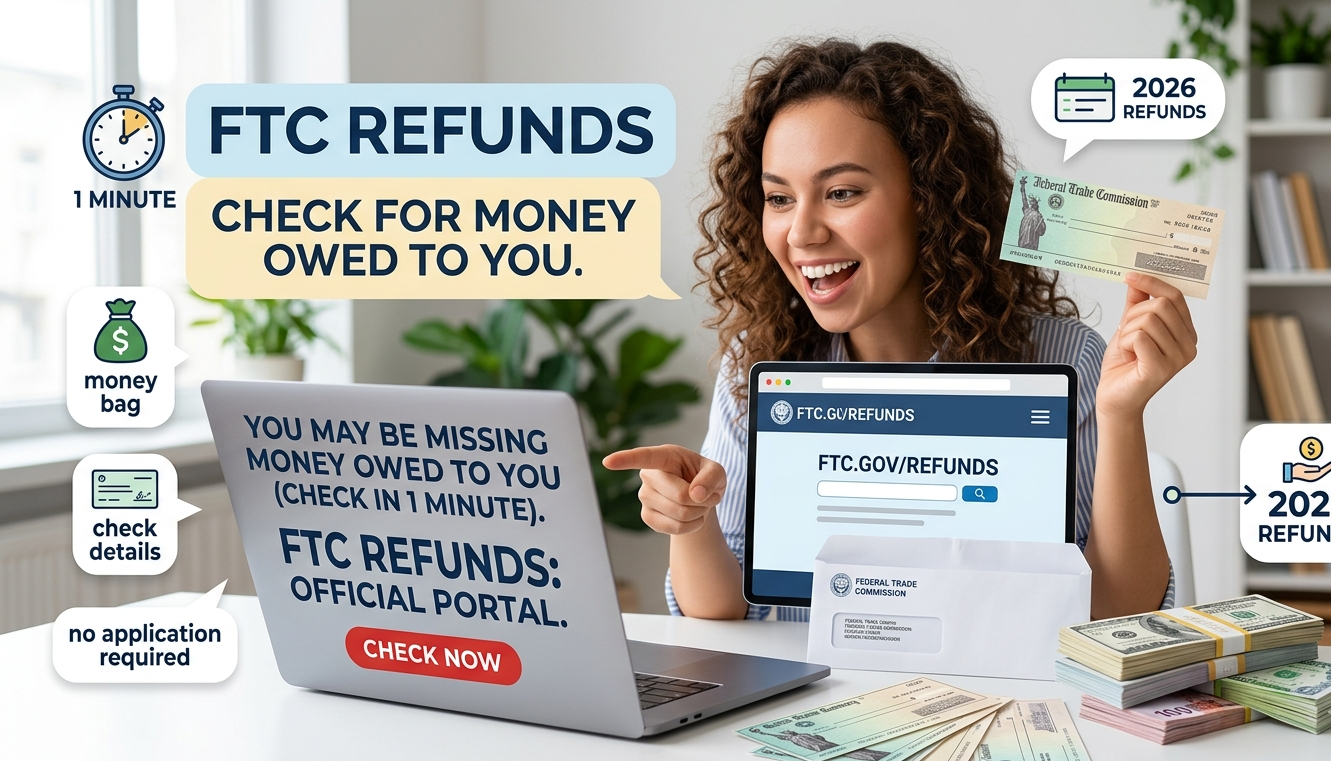
FTC Refunds: You Could Be Missing Money Owed to You (Check in 1 Minute)
The Federal Trade Commission has returned over $10 billion to consumers since 2000 — and millions of Americans have no idea they’re owed money. FTC refunds come from settlements against companies caught scamming, overcharging, or deceiving consumers. If you’ve ever used a telecom, fintech, health supplement, or online subscription service in the last decade, there’s a real chance your name is on an unclaimed FTC refund list. Here’s everything you need to know to check, claim, and receive your money.
🔍 Check If You’re Owed an FTC Refund Right Now
The official FTC refund lookup takes less than 60 seconds. No login required.
Check FTC Refund Status →Official FTC.gov website — free, no account needed
📄 What’s In This Guide
- What are FTC refunds and who gets them?
- How to check if you’re owed an FTC refund
- Biggest FTC settlements with consumer refunds (2023–2026)
- How FTC refund payments are sent
- How to claim your FTC refund payment
- FTC refund scams — how to stay safe
- Frequently asked questions
What Are FTC Refunds and Who Gets Them?
An FTC refund (also called an FTC settlement payment or FTC redress payment) is money returned to consumers by the Federal Trade Commission after it wins or settles a case against a company for illegal business practices. These include deceptive advertising, unauthorized charges, pyramid schemes, data breaches, and consumer fraud.
When the FTC wins money from a defendant company, it uses those funds to pay refunds directly to affected consumers. The FTC either sends payments automatically to known victims or requires consumers to file an FTC refund claim through a dedicated claims portal.
Who qualifies for FTC refunds?
You may be eligible for an FTC consumer refund if you:
- Were a paying customer of a company the FTC took action against
- Were charged unauthorized fees by a telecom, subscription, or app company
- Purchased a health supplement or weight loss product with false claims
- Were enrolled in a negative-option subscription without clear consent
- Were a victim of a debt relief, credit repair, or investment scam
- Had your data misused or were affected by a privacy violation settlement
How to Check If You’re Owed an FTC Refund
The FTC maintains a public list of all active and recent FTC refund programs at ftc.gov/refunds. Here’s how to check your status in under a minute:
Biggest FTC Settlements With Consumer Refunds (2023–2026)
These are some of the largest recent FTC settlement refund programs that have paid or are paying out to consumers:
| Company / Case | Settlement Amount | Who Qualifies | Status |
|---|---|---|---|
| Amazon / Prime | $25M+ | Consumers enrolled in Prime without consent | 🟢 Paying out |
| T-Mobile Data Breach | $350M | Customers affected by 2021 data breach | 🟢 Paying out |
| Publishers Clearing House | $18.5M | Consumers misled by sweepstakes marketing | 🟢 Active |
| Vonage (Telecom) | $100M | Customers charged hidden cancellation fees | 🟢 Paying out |
| Fortnite / Epic Games | $245M | Players charged via dark patterns or kids’ unauthorized purchases | 🟢 Paying out |
| Credit Karma | $3M | Users shown “pre-approved” offers that were not guaranteed | 🟡 Closed / monitor |
| LendUp Loans | $40M | Borrowers misled about loan terms and benefits | 🟢 Active |
| Intuit / TurboTax | $141M | Taxpayers misled into paid filing when they qualified for free | 🟢 Paying out |
How FTC Refund Payments Are Sent
The FTC sends FTC refund checks and digital payments through several methods depending on the case:
The FTC mails paper refund checks to the address on file with the defendant company. FTC refund checks often look like standard business checks — many people throw them away thinking they’re junk mail. Always open mail from settlement administrators.
Newer FTC cases often issue payments via PayPal to the email address associated with your account. You’ll receive an email from PayPal saying you have a pending payment. Accept within the deadline or it will be returned to the FTC.
Some cases require you to file a claim with documentation before receiving payment. Always access claim sites through ftc.gov/refunds — never through a link in an unsolicited email.
🚫 FTC Refund Scam Warning: Scammers frequently impersonate the FTC, claiming you’re owed a refund and asking for your bank account, Social Security number, or an upfront “processing fee.” The real FTC will never ask for payment to receive a refund, contact you by phone demanding personal info, or send texts with links to claim money. Always verify at ftc.gov only.
How to Claim Your FTC Refund Payment
If you find an active FTC refund program you qualify for, here’s how to complete your claim:
⚠ Important: FTC refund administrators use third-party names on checks, not “FTC” directly. If a check arrives from a company you don’t recognize, verify the case at ftc.gov/refunds before assuming it’s junk mail.
How to Stay Up to Date on New FTC Refund Programs
New FTC settlements are announced regularly. Here’s how to make sure you never miss a new FTC refund program:
- Bookmark ftc.gov/refunds and check monthly
- Sign up for FTC news alerts at consumer.ftc.gov
- Follow @FTC on social media for settlement announcements
- Check your spam/junk folder regularly for refund notices
- Update your address with companies you have accounts with
- Search the FTC database whenever you hear about a company being sued
Frequently Asked Questions
How do I know if I’m eligible for an FTC refund? ⌄
Are FTC refund payments taxable income? ⌄
What happens if I don’t cash my FTC refund check in time? ⌄
How long does it take to receive an FTC refund? ⌄
Can I get an FTC refund if I moved and changed my address? ⌄
Is ftc.gov/refunds the only legitimate FTC refund site? ⌄
Don’t Leave Your Money on the Table
It takes less than 60 seconds to check if you’re owed an FTC refund. Deadlines are real — check now.
🔍 Check FTC Refunds Now →Discover more from How to Start Earning Real Money Online
Subscribe to get the latest posts sent to your email.